Practicing disc golf is different from playing a casual game because there is something you want to achieve at the end of it. You want to make progress and improve yourself in the process. But how do you know if your practice is effective?
Today, we will be sharing a few disc golf practice tips that will help you practice a better disc golf game and achieve real progress by the end of it.
We will break them down in a few sections, which includes:
- Setting a Smart Goal
- Studying the Course
- Doing Practice Rounds with Score
- Practicing One Thing at a Time
- Creating a Routine
Okay, without any further ado, let’s get started.
1. Setting a Smart Goal
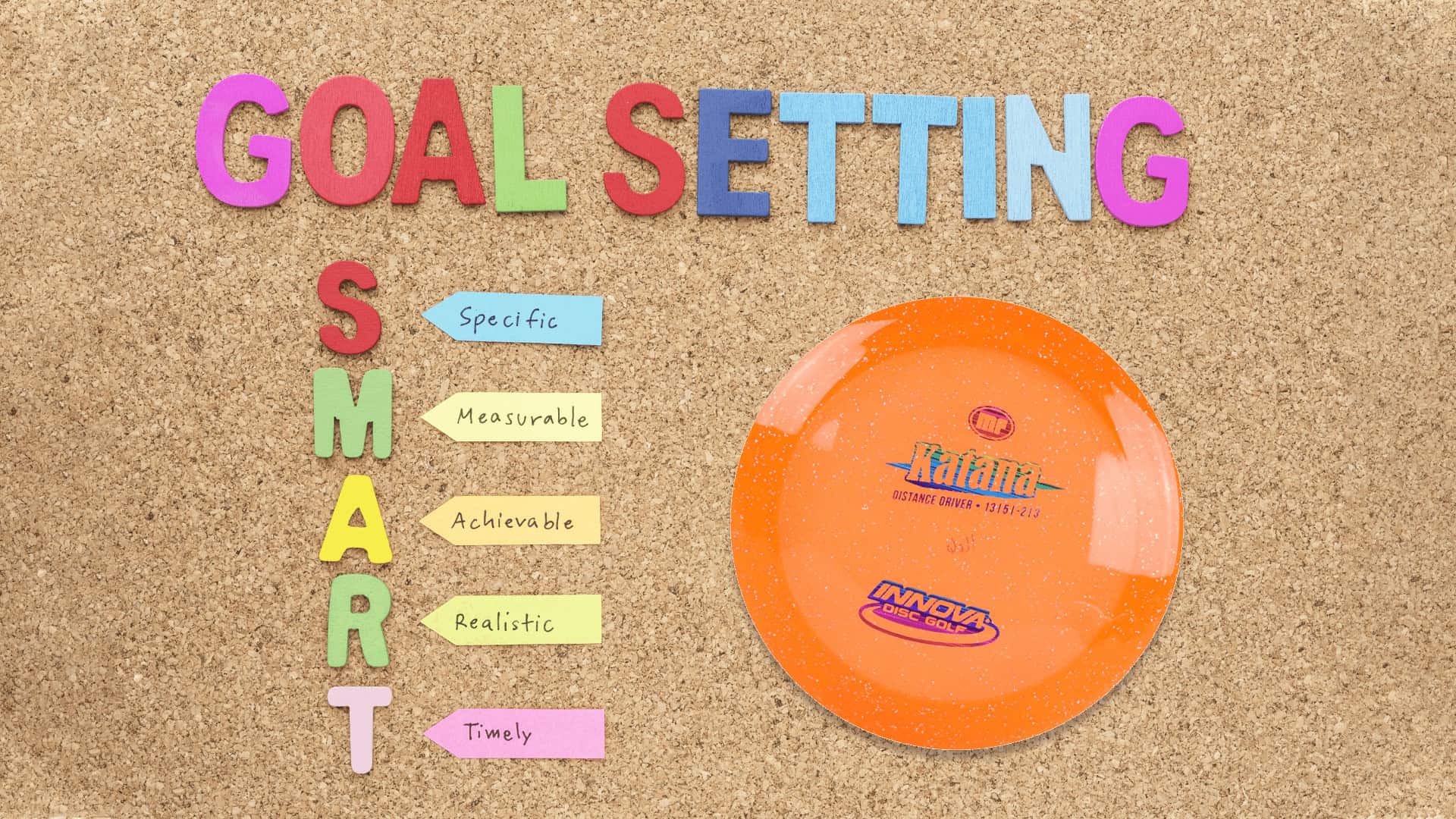
The first thing you should do is set a goal. What do you want to achieve from this practice? We will use the SMART method to help you answer this question and set a better goal.
SMART stands for specific, measurable, achievable, relevant, and time-based goals. We will explain each factor briefly and how it can be applied to disc golf.
Specific
When creating a goal, you need to be specific about your goals. What is it that you are trying to focus on that day? It could be your accuracy, distance, or trying to excel at a specific shot.
Make sure you choose an area to focus on instead of trying to practice everything at once. You can switch up the focus each time you play, but select one or two things to practice at a time.
Measurable
Make sure that the goal you have in mind is measurable. This way, you can see concrete progress and be motivated to do more.
For example, you want to practice your accuracy and see how often you can land your disc according to what you have in mind. You can throw your disc twenty times. Then, see how often you get your disc to land exactly as you want.
The times it flies on the intended flight path will give you a good idea of your progress. Once you know this, you can decide how to improve it afterward.
Achievable
The goal you are setting for yourself should be realistic and achievable. It should be something you can accomplish within the time.
For example, you want to practice your distance, but this is the first time you have done it. In this case, aiming to throw over 100 meters properly will take a lot of work to accomplish.
Instead, aim for a distance of 70 to 80 meters first. You can gradually increase your distance the next time you are practicing.
Relevant
Relevance is essential when setting a goal. Your practice goal should align with your skill levels and the purpose you have in mind.
For example, if you are a beginner, setting a goal to master flex shots is irrelevant. Instead, you should focus more on learning the basic throwing techniques.
Time-Based
The next thing to pay attention to is the time. Make sure you have a deadline and time-line for each milestone in your progress. Also, ensure that your goals can be fulfilled within the time set for yourself or readily available to you.
For example, if you only have one hour of free time, you cannot expect to practice on your par for every hole and complete it within the time. Completing those targets within the par will take longer than that.
Once again, be realistic and make sure the goal fits in the time you have.
2. Study The Course Before Playing
The next practice tip is to study the course before you play. This is relevant if you are playing at a new course or if you are practicing in nature courses filled with trees, bushes, obstacles, water features, etc., rather than just on a plain open-air course.
Observing the course prior to playing will give you an idea of the targets’ locations and the different obstacles that might be standing in your way. It will also allow you to strategize in advance about the types of shots you need to make to get the maximum result.
3. Do Practice Rounds with a Score
When doing practice rounds, you should act like you are playing an actual game. It means you need to add scores to the target and pay attention to time management as well.
Yes, it will be more challenging since it may not be the number one thing you are focusing on that day. But, since it simulates an actual game, you will be ready to play a real game with other people.
A strategy you can use when doing practice rounds to get the best scores and complete them within time is to analyze the target in advance. From here, you can guess the types of discs and angles, along with the throwing style you can use to get maximum results.
4. Practicing One Thing at a Time
Now, if you make any mistakes or feel like something is off, do not change everything all at once. If you do that, you will end up getting frustrated with yourself.
Instead, you want to change one thing at a time. If you have issues with your form, you can start by switching your elbow positioning first. Then, you can move to your footing followed by body rotation, etc.
This will help you develop muscle memory for one part of your body until it becomes natural. Once you have developed that muscle memory, you can move on to the next thing to fix until you finally get it all right.
5. Create a Routine
Last but not least, you want to create a practice routine for yourself. Select a specific time in the week to practice, go to the exact same course and stick with that routine until you have achieved the goal you are aiming for.
Having a routine will help you remain consistent and prevent you from getting distracted with things outside of your goal.
You can switch up your practice routine once you have achieved the goal of your previous routine.
We recommend changing up your routine once every few months so you do not get bored with practicing the same thing over and over.
Track Your Progress
After you are done practicing, you want to track your progress. The easiest way to concretely measure it is by having a specific notebook for progress writing.
Write down the improvements you have made from the practice section. You can also note the mistakes you have made during the practice and see how you can improve them next time.
Remember That Practice Takes Time
You have to remember that practice takes time. You may not get everything right on the first try, but it’s okay, with consistency, you will be able to achieve your goal in the end.
Do not get too discouraged if you fall a bit behind your original goal. You can always switch up your practice and figure out what style and routine work best for you.
Now, if you would like more tips for disc golf practice, we have created an article specifically for putting practice, which will help you improve your putting. You can find it here.
Until then, have fun and keep practicing!